
Physiology Mastery: How Real Estate Investors Can Design Energy for High Performance in 2026
Jun 17, 2026Mastering Your Physiology: The Overlooked Advantage for Multifamily Investors in 2026
Why Your Biggest Bottleneck May Not Be Time
Most multifamily investors think they have a time problem.
They look at their calendars and wonder:
-
How can I fit more into my day?
-
How do I scale without burning out?
-
Why do I always feel behind?
But in many cases, the issue isn't time.
It's energy.
Because having enough hours in the day means very little if you don't have the physical and mental capacity to maximize those hours.
As real estate investors, we spend enormous amounts of time focusing on:
-
Deal flow.
-
Capital raising.
-
Market analysis.
-
Asset management.
-
Portfolio growth.
Yet one of the most important assets we possess is often neglected:
Our physiology.
And ultimately, the quality of your life—and your business—is directly connected to the quality of your energy.
Why Health Is a Wealth Strategy
Many investors spend years building passive income streams and growing businesses.
But here's an important question:
Will you have the energy to enjoy the life you're working so hard to create?
Building wealth without maintaining your health is like buying a luxury car with no fuel.
You may possess the asset, but you can't fully experience its benefits.
True wealth includes:
-
Physical vitality.
-
Mental clarity.
-
Emotional resilience.
-
Strong relationships.
-
The ability to enjoy life right now—not someday.
Because life isn't waiting in the future.
Life is happening today.
The Foundation Every Investor Needs
Before discussing advanced strategies, we must start with the basics.
Sleep
Most adults require roughly 7–9 hours of quality sleep.
Sleep impacts:
-
Decision-making.
-
Emotional regulation.
-
Recovery.
-
Focus.
-
Productivity.
Nutrition
Food isn't just fuel.
It's information for your body.
What you eat affects:
-
Energy levels.
-
Mental performance.
-
Recovery.
-
Mood.
Movement
Modern investors spend most of their day sitting.
Our work is highly mental, but our bodies were designed to move.
Regular movement is no longer optional.
It's essential.
These fundamentals may seem simple, but simple doesn't mean easy.
And simple doesn't mean everyone consistently follows them.
Your Energy Needs Are Unique
One of the biggest mistakes high performers make is copying someone else's routine.
Your energy requirements depend on:
-
Your family responsibilities.
-
Your business demands.
-
Your travel schedule.
-
Your age.
-
Your goals.
A multifamily operator raising capital, managing assets, and leading a team has very different energy requirements than someone with a less demanding schedule.
Your physiology should support the life you're trying to create.
Not someone else's.
Design Your Week Around Energy—Not Just Time
Most investors plan their schedules.
Few plan their energy.
But your weekly design matters.
Ask yourself:
What activities require my highest level of focus?
Where do I need my best energy?
How much recovery do I need?
What kind of life am I trying to sustain?
For example:
-
Investor meetings require emotional energy.
-
Underwriting requires mental focus.
-
Family requires presence.
-
Travel requires physical stamina.
Your calendar should reflect these realities.
Build Your Health Around Your Vision
Health goals should be connected to the life you want.
Instead of saying:
"I want to get healthier."
Get specific:
-
Reach 18% body fat.
-
Gain 10 pounds of muscle.
-
Walk 10,000 steps daily.
-
Improve endurance for travel.
-
Increase energy throughout the workday.
Specific goals create accountability.
And accountability creates results.
Eat for Performance, Not Just Appearance
Many investors focus solely on aesthetics.
But performance matters more.
The right nutrition can improve:
-
Focus during acquisitions.
-
Energy during investor meetings.
-
Recovery after long workdays.
-
Mental clarity.
Your nutrition should support:
-
Your business.
-
Your family.
-
Your long-term goals.
Because the goal isn't simply looking healthy.
The goal is performing at your highest level.
Energy Conservation Is a Competitive Advantage
Creating energy is important.
Protecting energy is equally important.
Many entrepreneurs waste valuable energy on tasks that shouldn't require their attention.
Examples include:
-
Household repairs.
-
Administrative work.
-
Repetitive tasks.
-
Low-value activities.
One of the most powerful questions you can ask is:
"Is this the highest and best use of my time?"
Successful investors understand that:
-
Some tasks should be delegated.
-
Some should be automated.
-
Some should simply be eliminated.
Energy conservation creates more capacity for what matters most.
Value Your Time Like an Investor
Many wealthy entrepreneurs operate from one principle:
Time is more valuable than money.
Instead of asking:
"How much will this cost me?"
Ask:
"What is my time worth?"
If your highest-value activities generate hundreds of dollars per hour, spending hours on low-value tasks may actually cost you money.
Delegation isn't laziness.
It's leverage.
And leverage is what creates scale.
Why Buffers Matter for High Performers
Back-to-back meetings and nonstop work eventually create burnout.
That's why high performers intentionally schedule buffers.
These buffers may include:
-
Five minutes of stretching.
-
Short walks.
-
Recovery breaks.
-
Time between meetings.
Your body wasn't designed to remain stationary for hours at a time.
Movement throughout the day often matters more than a single gym session.
Movement Is More Than Exercise
Many people assume:
"I go to the gym, so I'm healthy."
But that's only part of the equation.
Your body responds to:
-
How you sit.
-
How you stand.
-
How frequently you move.
-
How often you stretch.
A single hour in the gym cannot fully offset ten hours of inactivity.
Your daily habits matter more than occasional workouts.
Don't Ignore Posture
Posture affects far more than appearance.
Poor posture can influence:
-
Back pain.
-
Energy levels.
-
Digestion.
-
Muscle imbalances.
-
Long-term mobility.
Small adjustments throughout the day can create massive long-term benefits.
Especially for investors whose work is primarily desk-based.
Human Connection Impacts Energy
High performance isn't only physical.
It's relational.
Simple things such as:
-
Spending time with loved ones.
-
Physical affection.
-
Meaningful conversations.
-
Community.
-
Time in nature.
can dramatically improve emotional well-being and reduce stress.
Many investors underestimate the impact relationships have on performance.
But connection is fuel.
Isolation is draining.
Your Routine Should Fit Your Life
There is no universal schedule.
The perfect routine is the one that supports:
-
Your business.
-
Your family.
-
Your goals.
-
Your priorities.
Some investors thrive with strict schedules.
Others need flexibility.
The key isn't copying someone else's system.
The key is creating one that works for you.
Think Beyond This Year
As investors, we naturally think long-term about assets.
But we should think long-term about our bodies too.
Ask yourself:
Is my current lifestyle sustainable for the next five years?
Am I building the energy required for the future I want?
Will my health allow me to enjoy the experiences I'm working toward?
Because wealth without vitality limits what's possible.
Final Thoughts
In multifamily investing, your body is your first asset.
And just like a property, it requires intentional management.
The most successful investors don't simply optimize their calendars.
They optimize their energy.
Because productivity isn't just about time.
It's about physiology.
And the future you're building will ultimately depend on the energy you have to live it.
Remember:
Your business can only grow to the level your energy can sustain.
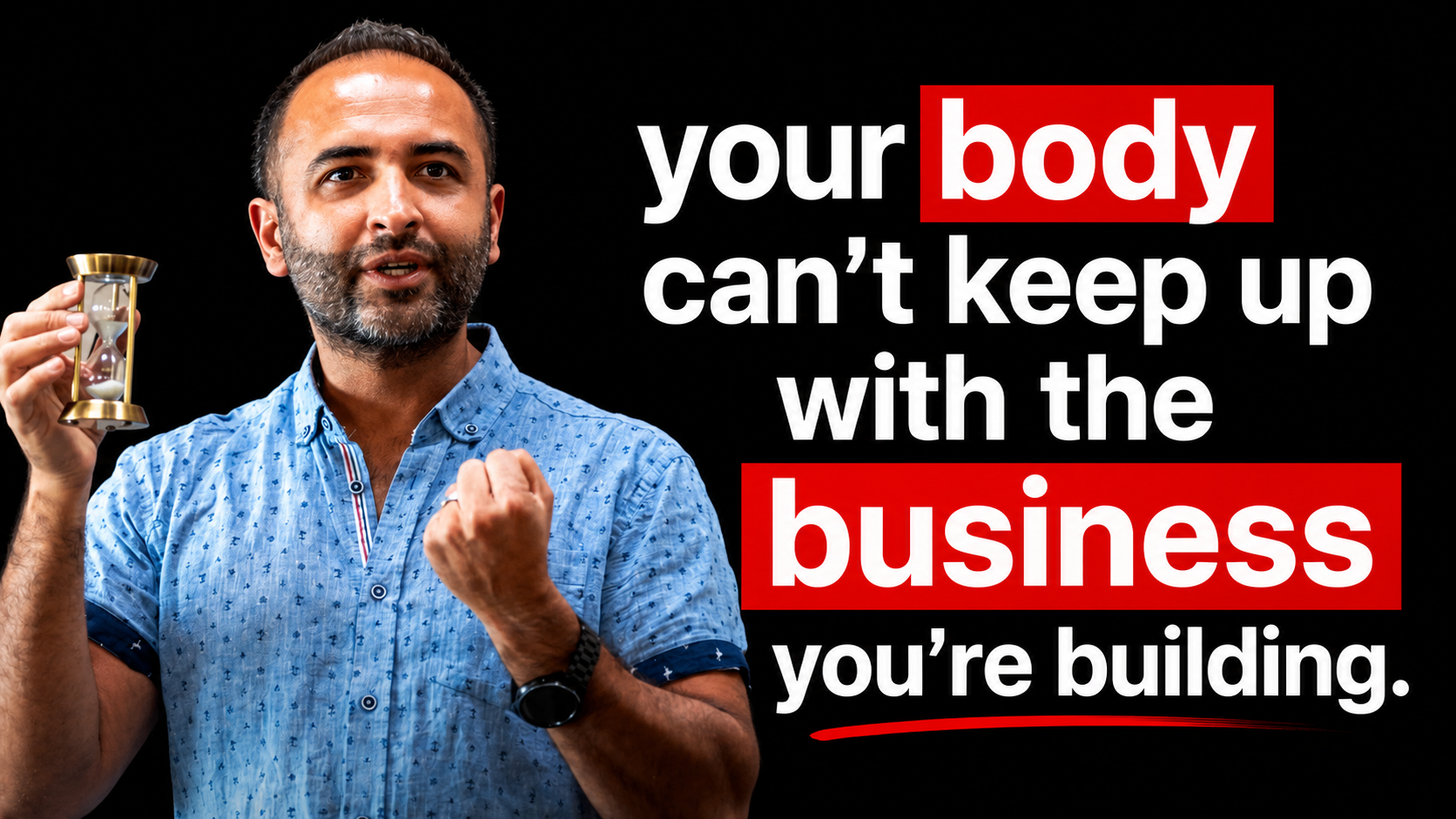
TRANSCRIPT
Um and our topic today and this week is on mastering your physiology for 2026.
0:07
We'll cover some of the basics like basics are given. But just because they're basics doesn't mean we all
0:13
follow them. A lot of times when we think about how to spend our time and we
0:19
look at our calendar, this is how much time I need for this and oh my god, I'm running out of time. But it might not be a time issue, it might be an energy
0:25
issue or physiology issue. And the other side of it is the quality of your life.
0:30
The quality of your life is directly linked to how your vitality is, how your
0:36
energy is, how you connect with others. And then long-term peace is what life
0:43
are you designing and your well-being is a huge part of that. There isn't virtually no point in building some
0:48
passive income source or active business or whatever you're doing is if you don't have the energy to be able to use it.
0:55
Thank you for joining us here for this video. We've noticed that there are certain percentage or a high percentage
1:01
of our audience haven't subscribed to our channel. If you can please click on the button to subscribe the channel to
1:08
the channel, it will help us create more content. It will help us which will help us reach more amazing people like you to
1:14
support them, serve them. So, please click on the subscribe uh button and I'll see you on the next video. Thank
1:21
you. Bye. And our topic today and this week is on mastering your physiology for
1:29
2026. And probably one of the most important
1:34
pieces of what you're going to do. And this is a good time of the year as well because lots of people have goals and
1:39
resolutions around their health and well-being. We'll cover some of the basics like basics are given. But just
1:46
because they're basics doesn't mean we all follow them. like some of the most important things when it comes to your
1:52
physiology or basic foundation. But then we'll talk about some subtle areas that apply to you as a high performer as
1:58
somebody who might need a lot more focus or a lot more energy that you can get
2:04
out of the week. A lot of times when we think about how to spend our time and we
2:10
look at our calendar, this is how much time I need for this and oh my god, I'm running out of time. But it might not be a time issue. might be an energy issue
2:17
or physiology issue. And the other side of it is the quality of your life. The quality of your life is directly linked
2:24
to how your vitality is, how your energy is, how you connect with others. And
2:31
then long-term peace is what life are you designing and your well-being is a
2:36
huge part of that. There isn't virtually no point in building some passive income source or active business or whatever
2:42
you're doing is if you don't have the energy to be able to use it, utilize it. Now, I'll share this quick story with
2:49
you. We were in New Mexico uh couple years ago with my family and we went to the top of this mountain area. It was an
2:56
Aboriginal site where you get to see this ancient settlement that they had and then after that you go down this uh
3:03
deep trail down to the bottom. It's about three 2,000 ft up, something like
3:09
that. And I was with my kids and there were it was just us, a younger family with a bunch of kids. And there were two
3:15
other senior couples. And they had two options. We'll send a van to the top of the mountain, pick you
3:22
up, they'll go down, or you can go down the trail. And I could tell everybody's making a decision. Even we were making a
3:27
decision cuz my my wife was looking at me and we were looking at the kids. Can the kids do this? My younger one was
3:34
four close to four years old at that time like and the literally the trail was like this and it's just going down
3:39
steeply through and you had space for 2 ft literally the whole time and there was a 40ft ladder that you had to climb
3:46
down onto [laughter] because the part of the trail was so steep that they had to put a ladder there built on the foundation of the
3:54
thing and you could see as we were making a decision I was watching the elders elder couple one of them looked
3:59
at each other I could tell they They weren't confident in their own body. So they're like, "Oh, can we get the van?"
4:05
The other one, they pushed the boundary. They're like, "We can do it." [laughter] Now, keep in mind, both of them,
4:11
including us, we have the time and energy and the money to do this thing, but are we confident enough to actually
4:17
take advantage of that situation? And that is a big question to answer.
4:22
You're working hard for something that will you be able to take advantage of? And then in the process as you're
4:28
running your life, running your business, how are you feeling? Because it's one thing to build towards
4:33
something, it's another thing. Are you actually enjoying your life right now? Because there are lots of people who are
4:39
waiting for some unknown future to live their life. But actually your life is right now and what is happening. And
4:45
I'll speak a lot to the right now. And that part is very important. So we'll start with the basics around your
4:50
physiology. We all know sleep, nutrition, movement across the board. If
4:56
you're a human being, you need those three areas. You need better quality of
5:02
sleep, you need movement, you need uh sleep movement and nutrition
5:10
includes your hydration, it also includes your food. How is it coming up? And at the basic level, we know that we
5:16
need to get a certain amount of sleep. And the science tells us anywhere from average is about 8 hours. For some people, it could be seven. For some
5:22
people, it could be nine. You got to experiment that for yourself. Nutrition, you got to find what food sits well with
5:29
your system and at what routines there need. And we'll talk about routines in a little bit too. And movement. We all
5:36
live in a sed sedentary lifestyle, especially in the western world. Most of
5:42
your work is mental in nature. So you either need to sit or stand or a mix of the two. That means movement is limited
5:50
to say the least. You will have to put extra time to make that work. But those two three areas as a foundation you
5:57
should consistently be thinking about how you're optimizing for those
6:02
are basics. Now what I want to go into more in terms of mastering your phys physiologies weekly design.
6:10
I want you to think about the weekly energy design. What does that mean? That means what the foundations are the same
6:17
for everybody. Sleep, nutrition, movement. But how you design your week matters and
6:23
it's connected to the life that you want. So as an example, the life that I have with my family, we're very much
6:30
engaged. I work from home. I'm always around my family. My business is from wherever we are. We're either traveling
6:36
or in one place, whatever that looks like. It's very engaged with people. My
6:41
work is very engaged with people. It could be online or it could be in person and my family life is very engaged because I'm consistently connected to my
6:48
family. In between calls and breaks, I'm usually going and interacting with my children, with my wife. And then our
6:55
weekends are pretty engaged because we're always around both my wife and I
7:00
have big families and we have friends. We're always consistently meeting and seeing people. Um, so we don't have a
7:08
life where we're just in one place. So my life is a little bit different than your life. How I design for my energy is
7:14
very different from how you, for example, I have little kids, they need constant energy from me. My six-month
7:21
old son, especially my six-year-old daughter, like they this seven month
7:26
now, seven-month-old is now starting to move. He constantly needs attention when I'm there. He wants to interact, engage.
7:33
Imagine my mind is not there. Imagine I'm constantly thinking about work. Imagine I can't focus. And there are
7:38
days where I'm too tired to even engage that way. Or my six-year-old who constantly wants to do tag or wants me
7:45
to throw her around or do all kinds of I can't if I finish work and I can't do that stuff that affects the quality of
7:51
my life. Or even in between, I can't engage with them because I don't have the mental energy. So I want you to
7:58
think about these things, your movement, your energy, your sleep, all that stuff
8:03
in the context of your life because your life even if it's similar to somebody else is very different in its own
8:10
context. You need you have a different energy need than the next person. I have two businesses. I have my family. We
8:16
both my wife and I, like I said, we have big families. We have friends around us consistently. We travel a lot. There's a
8:22
lot of movement involved. So we need to be very active for us to not only maintain and grow within this lifestyle
8:28
and business requires a lot of mental energy, a lot of focus because it's not
8:34
just about, oh, I just need to show up and do the work. No, I'm always creating things. I'm always building things. And
8:39
I would imagine a lot of you guys are building something on the side. That requires a different focus and creative
8:44
energy than somebody who just going to work and coming home. Very different. So it's not just about time. How are you
8:51
designing the energy for your week? And so it has to work with your weekly
8:58
stuff. It cannot just be a general routine for, oh, I just need to be active. I just need to eat well and I
9:05
just need to sleep better. That's a good starting point. But how are you specifically designing your life that
9:11
fits the life and the business that you're creating or the lifestyle that you're creating for you, family, and
9:17
friends, whatever that looks like. and for the bigger picture that you have in place. So, actually today I sent a
9:24
little clip that I saw of a couple hiking to the Andes Mountain in Peru to
9:30
Machu Picchu and I've been wanting to do that for a while and I watched the whole trek that they did. It was like a four or five day hike. Now, we're not going
9:38
to be able to do that now with the little kids, but I'm planning with a couple with one of my friends and his
9:43
wife, and I literally sent that video and said, "Guys, make sure you're in shape for the next 3 to 5 years
9:48
[laughter] because this is going to be you're not going to be able to do it if you're going to be tired walking an [laughter]
9:54
hour cuz it's going to be 16 hour days of walking up the mountain. Like, we're doing this thing not now, but we're
10:01
going to be working towards that." like that requires a different readiness for
10:06
your life than oh I'm just going to go to a luxury resort and lie down on sand which I don't mind that but I'm looking
10:12
for a different adventure in my life. So it means that I have to maintain my life a little bit differently. So what does
10:17
that mean? That means whenever you think thinking about your basics you're also thinking about how one how does it
10:24
specifically apply to me? But for example for this year what is what is your what are you trying to do? I was on
10:31
a call with a client when I asked him what's like what's the ideal outcome in terms of your physiology and energy
10:37
those things in the next quarter in the next year he's like well I just want to gain more muscle
10:44
that doesn't mean anything because one more doesn't mean anything to you other
10:49
than like a concept but you can actually measure that you could say for example I want to get to 200 lb with 18% body fat
10:58
that's measurable which means that you will actually it forces you to track certain things to
11:03
get to that. It keeps you accountable to that and that's actually fairly hard. I've been trying to gain a certain amount of muscle and I'm 40 plus
11:12
and as far as I understand it gets a little bit harder to gain muscle as you age as well and we're losing muscle mass
11:18
too every 10 years. So for me the hardest part hasn't been going to the gym. The hardest part part has been the
11:25
nutrition piece of maintaining u certain amount of protein intake and also sleeping so I can recover faster
11:33
much harder than just showing up at the gym I can do at any time but to make sure that whether on days or off days so
11:41
I have to track that to a certain degree it doesn't have to be so meticulous but I need to be able to track that so even
11:46
on my off days I need to pay close attention to like on the weekends we eat carbs more but I still need to pay
11:53
attention to 130 to 150 gram of protein I need to take
11:58
for me to be able to gain that level of muscle in the next 6 months for example.
12:03
Why is that important for me? Well, I do pretty much 5 days of on and off
12:08
intermittent fasting and I take a lot more protein and veggies. Why? Because I want to have my focus engaged. As soon
12:15
as I take a high amount of carb, it affects my focus and energy throughout the day. So, I'm not just eating for,
12:22
oh, I'm gonna have a discount body. I'm eating for how is my energy right now? Is this sustaining my business and my
12:28
life? And do I have my energy at the end of the day when I get to be with my kids and by the end of the week when I get to
12:34
be around a lot of people or we're traveling or doing whatever. So, I need to pay attention to to what my life is.
12:41
It cannot be a generalized plan for everybody else. And it needs to be specific enough that I can track it to
12:48
some degree. By the way, as a side note, there are some incredible tools nowadays. Even you can even use like
12:54
Gemini, Chat, GPT, Claw, these things that can help you with tracking these things. So, you can give it that, hey,
13:00
here are my goals. What plan would you create based on what I'm trying to create and ask me
13:06
questions you need so you can create a better plan. You can you can use it fills in some of the gaps and knowledge.
13:11
And of course at some point you might need a physical coach or mentor or trainer at the gym or nutritionist that
13:17
can give you refine the plan if you need it. I just have a lot of experience that for example in gym and eating and
13:23
experimenting with different things that AI is mostly enough for me minus some other feedback that I might need.
13:30
But those tools are very good to use. One concept I want to add in this area
13:36
is conservation of energy. Uh so one is designing your life for better energy.
13:41
The other one is conservation of energy. We waste a lot of energy and worrying about things being stuck in fear mode or
13:49
wasting energy on certain things. So I had a client who who's trying to build a business on the side and he has his W2
13:55
job too and he loves tinkering with things and it's fine but and once in a while he likes doing that like fixing
14:01
something that's broken like his fridge or something else and it's it's a fun thing. and he had dedicated about 10
14:08
hours to work on his business to build out. And when I asked him when we met like, "What did you do last week?" He's like, "To be honest, I've spent the last
14:15
10 hours of the week trying to fix my this device at home." I'm like, "Did you enjoy?" He's like, "I did." I'm like,
14:21
"Was it worth your time?" Like, in terms of enjoyment, but not in terms of my commitment. I'm like, "So, had you paid
14:27
somebody, how much would it would that have been?" He's like, "Anywhere from 300 to maybe $500."
14:34
I got thinking would that time have been more worth it to build your business or work on that and it was very clear it's
14:41
like it would have been worth it after 30 minutes of spending time that I couldn't figure it out to just outsource that thing and that might also be true
14:49
for things like lawnmowing snow removal some of the things that you might have more money than you think but the
14:55
question is ask yourself would it help me conserve energy so I can redirect it into other things not just business but
15:02
think of your there are times where I can actually go work on something but I'd rather spend that time with my
15:07
family members like I can pay somebody else to do that. Now of course that might put a strain on
15:13
financial but what is the point of the financial side it's just resource that I can allocate that gives me more time
15:20
that gives me more energy so it's very important to think about like what where
15:25
are you have resources one resource is your time the other one is energy the other one is finances where are these
15:32
going to design your life and where are you conserving energy and directing it
15:37
towards the things that actually matter and I don't think A lot of people are intentional in this area, me including
15:44
like I have to spend more time to think about sometimes I might sit there and worry about oh this person is charging
15:50
me a certain I need to call them or I need to find out but then I might end up getting stuck on a call for 2 hours. Was
15:56
that worth my time to save $200 or $500? It usually isn't unless that becomes a
16:03
recurring problem which is a different thing. But there are times where I let go of problems like that. I heard this
16:08
investor a few uh a few months ago. He's like he was asked he's the angel
16:14
investor $100 million plus deals that he's a part of. He's like what when was
16:19
the time when you went towards building or creating wealth and he basically said
16:25
that it started with the mindset that I needed to value my time more than anything else. And he elaborated on it.
16:32
He even joked around about it. He said he's like there are times where I needed to return something and when I would
16:37
calculate that it would take me 3 hours to go through the process of doing this and I could and he had a number in his
16:43
mind as a consultant that I could make $2,000 in those three hours or $500 in
16:49
those three hours when I calculated those three hours are going to cost me this much money. Why would I do that? You would throw the thing away. I don't
16:55
care. like I rather spend that time on my consulting business that will give me
17:00
that money and it's not a repetitive problem and throw away the thing. I don't need to call the customer service.
17:06
I don't need to stop wasting times and lines and other things so I can conserve that time and energy to focus on my
17:12
goals that actually matter. So he started valuing his time a lot more than temporary financial gain in the moment.
17:20
That's such a powerful and by the way there's a formula for that. Decide what's your ideal per hour. That could
17:27
be $200, $500, $1,000 an hour. And stop doing working on things that are $20 per
17:34
hour. In fact, that's also a way to hire VAS and other people where if you're doing make a list of all the things that
17:40
you're doing on in a given week, if you're spending a good portion of your time doing $20 tasks or $30 tasks when
17:47
you can make $200 an hour, why are you doing that stuff? You can outsource that easily. either automate it or outsources
17:53
or delegate it. That will not only like long-term help you financially but
17:59
short-term it'll help conserve energy and we rarely think about these things.
18:07
Another main key point is buffers and resets. This is one of the harder things to
18:13
admit for me. So as you guys know I had a back injury recently. Now there are of course factors outside of my control
18:19
things happen were but I know what led up to it. So what ended up happening we were supposed to go to a warmer climate
18:26
and that got delayed. We had to order a new RV and everything and then we were in the cold region and it started
18:33
snowing. I was going I was walking every day multiple times a week along with my gym routine. As soon as it got cold I
18:40
got a little bit lazy and I stopped walking as much. I just went to the gym, came home, and I was sitting a lot
18:46
longer. I was standing a lot longer, and I was writing my book at that time, too. So, it was like extra focus mentally,
18:53
and and I wasn't paying as much attention to my body outside of my gym routine. My if I were to look back and
19:00
see, and that was my lesson, was that had I kept up some even if I stopped
19:06
walking too much, I started doing a lot more stretching, I would have avoided that injury. But it caught up in about
19:12
two weeks of less and less mobility and one bad movement and just my back was
19:19
out. Now I'm It took me about five weeks. Now I'm still recovering. It cost me five weeks of playing with my kids
19:27
being in pain and being able to focus and not being able to move forward. Like there was a real cost to that because I
19:34
didn't pay attention to something. I got lazy. I stopped being intentional in that area because I was focusing on other things.
19:41
It's easy for me to say, well, no, I I made the wrong move or I picked up
19:46
something too heavy. But I know I only know how my routine for the next the
19:52
last two weeks were. And that had a huge part in what happened. And now I'm even
19:57
just today was really cold outside. I went to the gym, but I before this call about 10 15 minutes I went for a walk.
20:03
Like that was worth it. I could feel the tightness in my back, but I'm like, "This was worth it. Just get outside." Even though it was a little bit icy, I
20:09
just went in the corners and came back. But like little things make a big
20:15
difference. So, how's that connected to buffer? So, I I intentionally put in buffer times
20:22
between calls. Like it could be 15 minutes, 20 minutes. Like even 5 minutes of stretching can help with so many
20:29
things. We don't realize how much our body goes under strain when we're sitting or standing all day. A lot of
20:36
people say get a standing disc. It has a very similar effect. Might be better than sitting, but it's not the same as
20:41
movement. Like our bodies were made or designed to be in motion, not in one
20:47
place. This is a very short time. Like our mental work is increasing exponentially, but our bodies haven't
20:54
caught up to that. Just a few decades ago, people were moving a lot more. This
20:59
is why most of the problems when scientists look at it, most of our problems health-wise are problems of
21:05
abundance. We have too much food. We have too much rest time. We have too much we're too much in comfortable
21:11
regions like warm indoors. We don't go outside. We don't get exposed to different temperatures. We don't move a
21:17
lot. We're not strained a lot. So, we eat a lot more. So, it has an effect on our physiology. So, do you have enough
21:25
buffers in between your calls in between mental work that move intentionally moves your body? Now, again, depends
21:32
what you're doing. Depends on what you're doing. It goes back to what is the outcome you're trying to gain. I'm trying to have a lot more mental and
21:40
physical energy mental on the work side for me to engage with my work and do focus creative work that doesn't like
21:46
it's not comfortable repetitive work. A lot of it is I need to create things. I need to build things that requires a lot
21:53
of mental bandwidth and later on I need to be engaged in my life. How can I engage with my family if I'm drowned in
22:01
lack of energy? So think about what you're trying to build. And then
22:09
simple thing that very few people pay attention to posture. I don't know if I spelled this right but
22:14
your posture has a has an effect on a lot of things. that has an effect on your back. And one of the things when I
22:21
shared my story around my back injury, my posture is one of the first thing that was was one of the first things that got affected when I started walking
22:27
less and started stretching less. I found myself doing leaning forward a lot more, sitting a lot more or leaning a
22:35
lot more instead of my back being straight. Now I'm paying a lot closer attention to that. And I realize it even
22:41
when I'm paying close attention to that, it's easy for my body to go in different direction. And that affects a lot of
22:46
things. how your bone responds to different things. How your muscles are strained. We stop using some of the
22:52
stabilizer muscles and around our back. So many areas where we get a lot of
22:57
injuries because it puts more of a strain on the major muscles and our on our bones. And on top of that, posture
23:04
also affects digestion. We know that our digestion is now linked to our mood.
23:10
We actually have neurons in our digestive system that we weren't aware of a decade ago as common knowledge. Now
23:16
we understand that a lot of our mood uh swings and how we feel, how connected we
23:22
feel, how h happy we feel is very much connected to what's going on with our gut bacteria, digestion, those things.
23:29
So what does that mean? That means that's actively affected how we feel, how we what we focus on, those things.
23:36
Be pay very close attention to your posture, whether standing or sitting. Sometimes we're standing, our leg is in
23:41
a weird direction. And I find myself like putting strain on one leg versus the other because I'm not very aware of
23:47
it. Like little things can shift your energy quite a bit and we don't connect
23:52
the dots with it. Like you might think that I'm eating everything fine but my energy is low. That might be your posture.
23:59
Finally, one last piece of this puzzle that most couple of last pieces that
24:05
most people underestimate this one is your connection. Physical connection. As human beings, we're tactile beings. So
24:12
just as simple as a hug or a kiss from somebody completely changes our hormone
24:18
levels. You might be high on cortisol which means stress hormone that is up.
24:24
You might just need a 30-se secondond hug from somebody but it you might not think of that as a healthy routine. I
24:31
actually look at that like I just hold the people close to me like giving a hug and pausing for like 30 seconds has a
24:37
huge effect. or just looking at somebody and less creepy, more intentional,
24:43
[laughter] somebody close to you. But like simple
24:49
thing, physical touch and also physical touch in nature like your feet on the grass or on the floor or being outside a
24:57
little bit more, they have huge effects on our on our physiology. There's something as forest baiting that they do
25:02
in Japan a lot more, just being in nature. Now that could change with
25:08
weather or depending on what you have in your routine. We might not think of that as a as a phys physiology development or
25:15
energy development but it has a huge effect on you and those around you. So how are you connect physically connecting with your environment? Are
25:21
you always alone? Are you always in high stress mode? Do you interact and engage with other people? Do you interact and
25:28
engage with nature? That has an effect on your physiology quite a bit. Like it's such a subtle point, but most
25:34
people might miss that by just being busy in day-to-day. Finally, the thing I want you to think about is
25:40
your routine and structure. One, going back to one of the first
25:45
points, it needs to be designed for you, not for some random person, but for your life and the outcomes you're need you're
25:52
wanting to create. And your routine, depending on what you want, needs to be
25:58
flexible or more tight based on what you're trying to create. And this is why
26:04
I don't like the ideas of work life routine and all that stuff because somebody's giving you advice based on
26:10
some generalized thing, but it might not fit what you're trying to do. You might need to work on the weekend or you might
26:15
not. I don't work on the weekend just because I I've decided to spend that time with my family. But then that means
26:20
my weekdays have to be super structured. My weekends are not as structured. But
26:26
if I don't have the weekdays as structured, then it would bleed into the weekend. Same thing with our it's not
26:32
just calendar like even the buffers that I have. It's to make sure my my energy is
26:38
sustainable throughout the week so I don't crash on the weekend completely. It's easy to crash on the weekend where
26:45
you're just spending the whole weekend recovering. Even if you have the weekend off, you might as well just work because
26:50
all you're doing is recovery and you're not actually there on the weekend, whether it's mentally or physically. So,
26:56
just a few key points for you to remember that it's easy to say that I'm going to be in a better health or better
27:01
energy, but for what purpose? Like, you need to really spend some time and think about the intentions behind that and the
27:07
life that you're designing. It will be very different from the next person. They might be looking at it completely
27:12
different than you. But if you're not spending any time specifically looking at the factors that affect you and the
27:19
just some of the specifics around that is what movement do you need that supports the life that you're trying to
27:25
create? What nutrition you need for that? What recovery do you need for that? What breaks do you need to sustain
27:31
your energy throughout the day or throughout the week? The details are going to vary between my life and your
27:36
life. and take this week as a challenge to think about more detail like what am
27:41
I trying to create now and in the future is my energy and physiology it's set up
27:46
to be sustainable for this week in the next year or the next 5 years
27:52
and if you're not thinking of it that way you're probably just running some general thing that you've heard out on
27:57
social media or something that you learned a long time ago and it's not working for you and that might need for
28:02
you to get support on the nutrition side or use the AI or you might need a coach or a nutritionist or a fitness trainer,
28:10
something that will help you build a routine that works for you in terms of your your movement, nutrition or sleep
28:16
or whatever that might be. And and and look at it at levels like we think gym is enough, but it's not. It's actually
28:21
our mo hour by hour, every hour, how you're moving and how you're
28:27
sitting, how you're standing, how you're resting, they make a big difference overall in how you feel. It's not just
28:34
gym. A lot of people might say like it's oh I joined jib and it's great. There are lots of people that go and create so
28:39
many injuries. I have a fitness trainer. He was joking around about it. He's like oh when I give my clients the stretching
28:44
routine that's just for them. I just mess up my back by just lifting heavy anyway. And he because he's messed up
28:50
his back a few times cuz he didn't follow his own advice. But like little things make a big difference especially
28:56
if your lifestyle is very heavy on the mental side. And I would guess that pretty much everybody in this community
29:01
has a very high level of mental strain on their on their thinking mind. They do
29:06
a lot of mental work and physical is secondary. So you actually have to be very intentional versus somebody who's
29:12
physically constantly active. Chuck is sharing. I just got weighed at a doc's appointment. Was surprised at high at
29:19
how high I it got. I plan to do some longer travel later this year. I realize I have to get my weight walking
29:25
endurance and strength as part of my planning for my trip. It's one of the biggest bummers where you go somewhere
29:30
where you can't do create some of the experiences that you're wanting to create. And I always tell them like
29:36
we're not getting any younger. So you're going on the older end that means your body body's ability to recover is
29:43
getting slower. But it's mostly because of the lifestyle that we have. Partly it's aging but it's actually mostly for
29:50
most people 40 above their lifestyle changes dramatically before when they were in their 20s which were moving a
29:56
lot more versus once you settle into a lifestyle family thing you have responsibilities a lot of them are on
30:02
the mental side and your movement goes lower and lower and lower and your lifestyle and then you lose a lot more
30:09
muscle and your body's a lot more stiffer much more prone to injury less active like those are simple things but
30:16
it completely completely overlook them. And I've seen the effects of it in my own life,
30:21
but I see it over and over with my clients as well. So,
30:26
I had to realize that healthy eating and better exercise is a part of my trip planning and make it connected to
30:32
something that you're excited about, like something you're working towards. For me, it's lots of things. The events that I do, like my the three-day events
30:39
that I do, even if those are a couple of times a year, they are very straining physically and mentally and emotionally.
30:46
It takes me 3 days to recover out of them. But if I'm in a better shape, that recovery time slows down. I can show up
30:51
a lot better, too. And that's just related to that. I'll leave it at that. Take some time to think about being a
30:57
lot more intentional on specifically how you're designing your energy around your lifestyle and the goals that you have.
31:03
You're going to hear a lot more from other members, how they're improving these areas in their life. I'll leave it
31:09
at that. We'll see you guys on Thursday. Take care of y'all.
All
Stay connected with news and updates!
Join our mailing list to receive the latest news and updates from our team.
Don't worry, your information will not be shared.
We hate SPAM. We will never sell your information, for any reason.
